
About CAVIGEN
CAVIGEN is a spin-off from Karlsruhe Institute of Technology (KIT) focused on 3D cell culture and oxygen measurement. With the CaviSphere® platform, we help labs build more reproducible, oxygen-aware 3D models for drug development, Organ-on-Chip systems and advanced in vitro research.
On this page you can learn more about:
KIT Spin-off
Funded by GO-Bio initial, Helmholtz Enterprise
25+ years experience
in 3D cell culture & microthermoforming
Awards & recognition
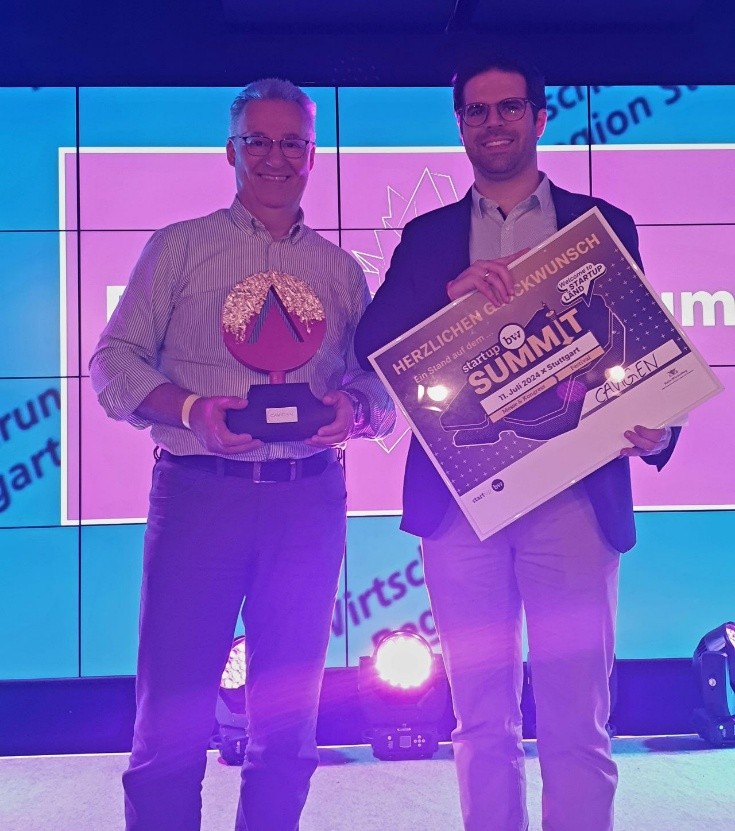
CyberOne, Road to START Summit, VivaTech Tech4Change
Our story and mission

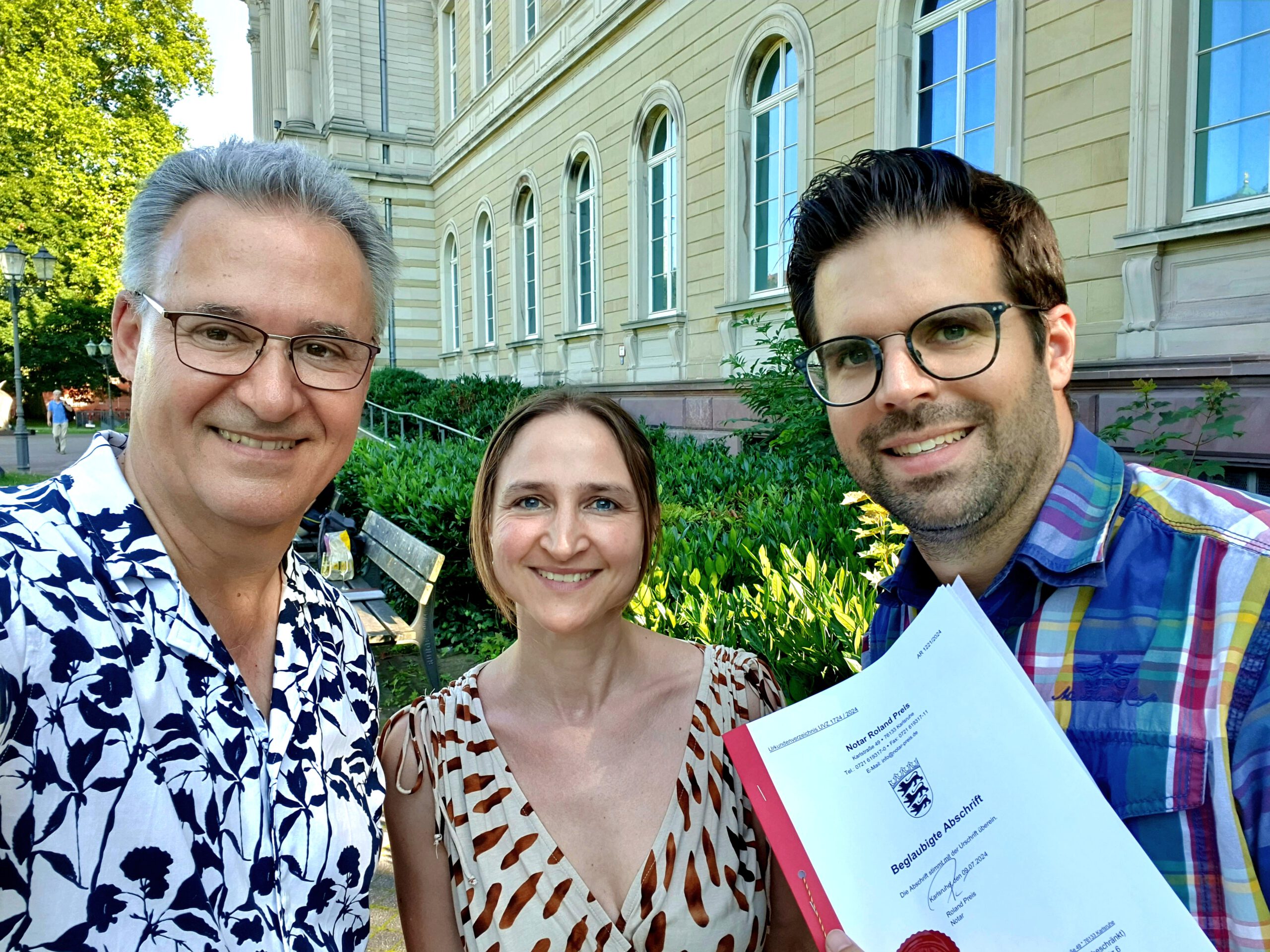
CAVIGEN specialises in developing technology for 3D cell culture systems that bring in vitro conditions closer to in vivo reality. The company was founded by a team with more than 25 years of combined experience in 3D cell culture and microthermoforming at Karlsruhe Institute of Technology (KIT).
We originated as a spin-off from KIT and were supported by competitive funding programmes such as GO-Bio initial, Helmholtz Enterprise and ZIM cooperation projects. Over the years, our team has gained extensive experience in the development of Organ-on-Chip systems, project management, intellectual property protection and translating research into practical solutions.

Our vision is a future in which pharmaceutical research is no longer limited by oversimplified in vitro models and hyperoxic culture conditions. We aim to make 3D cell culture models more physiologically relevant, particularly with respect to oxygen, so that in vitro data are more predictive for the human situation.
Our mission is to bridge the gap between in vitro and in vivo testing by providing:
- more accurate and reproducible 3D cell culture platforms
- oxygen-aware 3D models that help interpret experiments under realistic conditions
- tools that support the development of New Approach Methodologies (NAMs) and contribute to 3R strategies
Technology and scientific background
The CaviSphere® platform builds on a microthermoforming process that turns thin polymer films into dense arrays of microcavities. These microcavity arrays are the basis for MicroSphere (imaging-optimised 3D cultures), PoroSphere (porous, perfusable structures) and SensoSphere (oxygen-sensing microcavities).
Technology pillars
3D microcavity arrays
CaviSphere microcavity arrays enable controlled formation and cultivation of 3D spheroids and organoids. Defined cavity geometries help to achieve more uniform aggregate sizes and to standardise 3D culture conditions across experiments and labs.
Porous microcavity structures
PoroSphere variants are based on porous films that combine microcavities with controlled permeability. They support perfusion, co-culture and barrier or migration models, and can be integrated into microfluidic devices and Organ-on-Chip systems.
Oxygen-sensitive sensor arrays
SensoSphere integrates optical oxygen sensor dyes into the microcavities. Using dynamic fluorescence quenching and ratiometric read-out, SensoSphere allows spatially resolved oxygen measurements directly in the pericellular microenvironment of 3D cell cultures.
Scientific basis, IP and brands
Scientific basis
The CaviSphere technology is underpinned by peer-reviewed publications in Frontiers in Bioengineering and Biotechnology and MDPI journals. These articles describe oxygen-sensitive microcavity arrays, discuss physiological oxygen in 3D cell culture and review advanced 3D culture techniques in micro-bioreactors.
IP and patents
CAVIGEN operates on the basis of patents licensed from KIT that cover oxygen-sensitive sensor arrays (SensoSpheres), production processes and specific assay concepts. An external freedom-to-operate opinion confirms that the planned products can be commercialised without blocking third-party rights.
CAVIGEN and CaviSphere brands
CAVIGEN and CaviSphere are registered trademarks in Germany. Together with our IP portfolio, they form the foundation for a scalable platform and ecosystem around 3D cell culture, oxygen measurement and integration with Organ-on-Chip and imaging technologies.
Team

CAVIGEN was founded by a team that combines expertise in 3D cell culture, oxygen measurement, engineering and the translation of research into practical solutions.
Christoph Grün
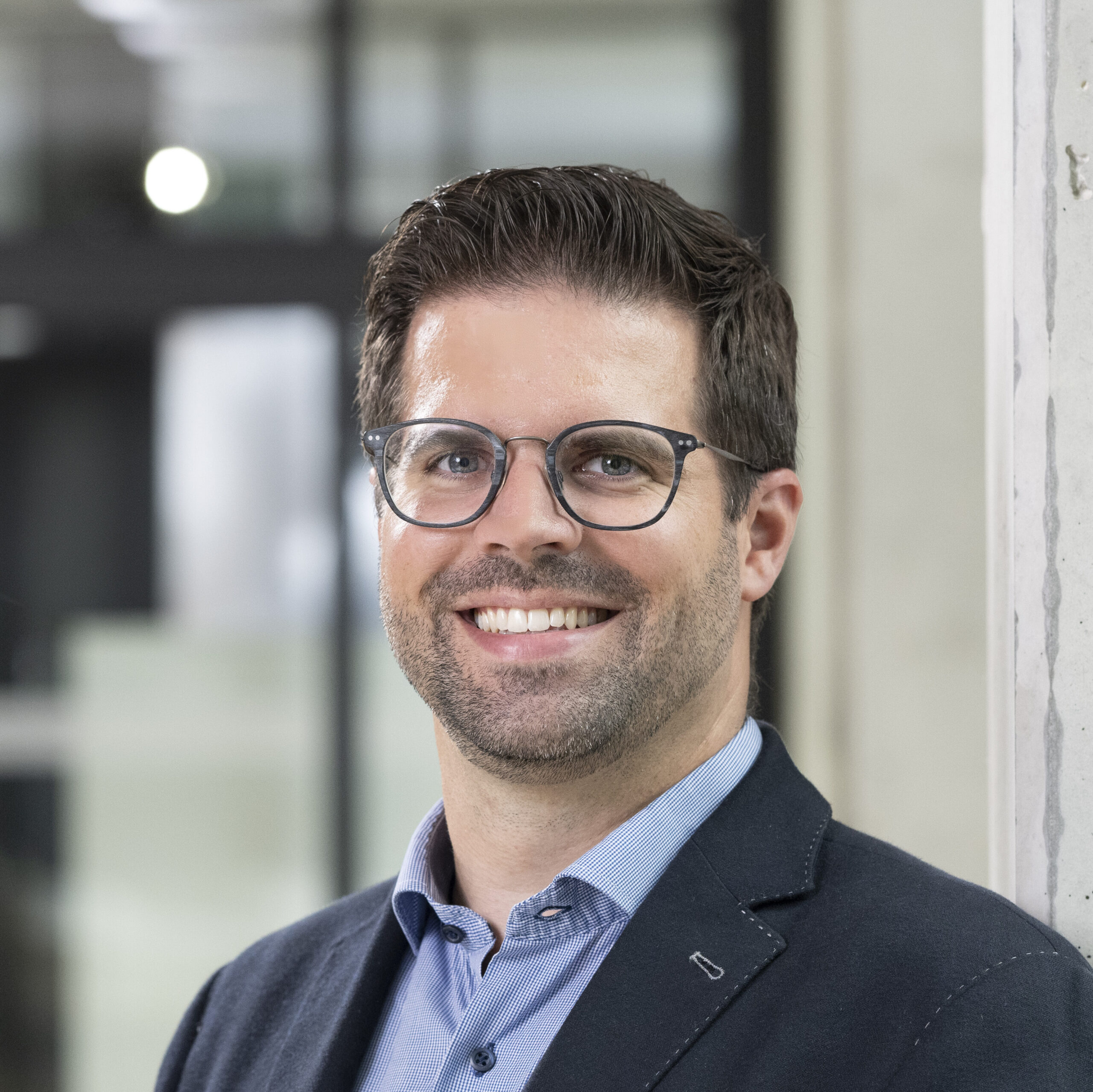
Founder &
CEO
Christoph holds a Ph.D. in Natural Sciences (Dr. rer. nat., summa cum laude) from Karlsruhe Institute of Technology (KIT), where he developed oxygen-sensitive 3D cell culture systems based on microcavity arrays. His work combines microthermoforming, optical sensor technology and advanced 3D cell biology and has led to multiple patent applications on oxygen-sensing sensor arrays, cardiotoxicity assays and production processes.
Before founding CAVIGEN, Christoph led an EXIST research transfer project on Organ-on-Chip systems at KIT and built an interdisciplinary team focused on vascularised microfluidic platforms. He also gained extensive experience in business development, fundraising and IP strategy, securing more than €2 million in public funding through programmes such as GO-Bio initial, Helmholtz Enterprise and ZIM.
In addition to his scientific work, Christoph completed a certificate in Patent and Innovation Protection Management (University of Saarland), with a focus on IP rights, licensing and freedom-to-operate analysis. At CAVIGEN, he is responsible for the technological roadmap, partnerships with academic and industrial users and the overall strategic development of the CaviSphere platform. He regularly presents at international conferences on 3D cell culture, Organ-on-Chip and oxygen measurement.
Cordula Nies
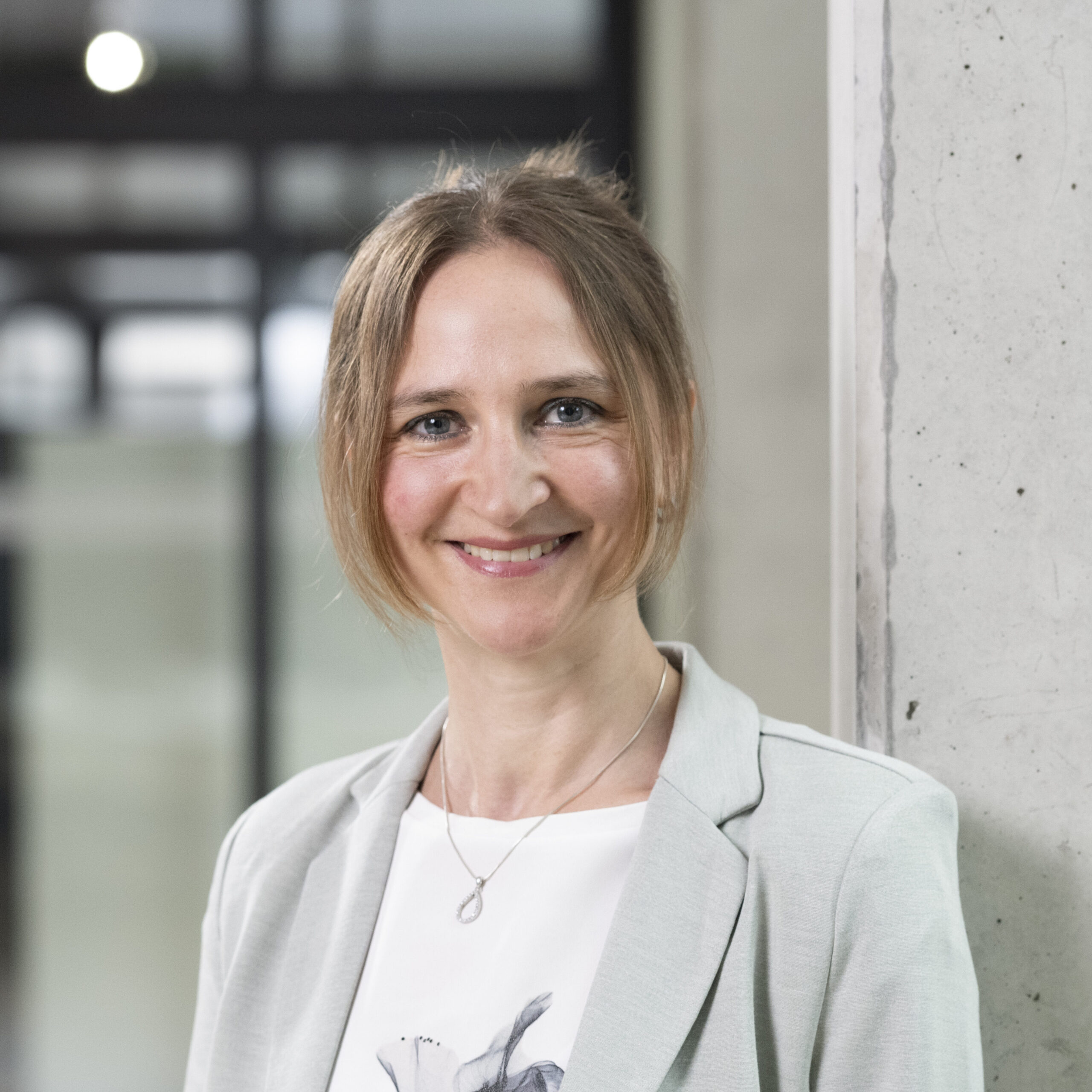
Founder & Customer Experience Manager
Cordula holds a degree in Food Chemistry and a state examination, and has worked for many years as a scientific researcher at Karlsruhe Institute of Technology (KIT). Her work has focused on 3D cell culture, microcavity arrays and the development of artificial stem cell niches, including model systems for the haematopoietic stem cell niche. She has co-authored scientific publications and book chapters on microcavity-array-based 3D models and has broad experience in biological safety, method development and routine 3D culture workflows.
At CAVIGEN, Cordula is responsible for customer experience and quality management. She works closely with labs to understand their requirements, supports the establishment of CaviSphere-based 3D models and ensures that protocols and application notes are practical and reproducible. Her background in both chemistry and cell biology allows her to bridge between material properties, fabrication processes and biological performance.
Cordula also plays a key role in internal processes: she contributes to the definition of SOPs, quality criteria and documentation, and helps create an open, collaborative working environment in which feedback from users is systematically translated into improvements of the platform.
Eric Gottwald
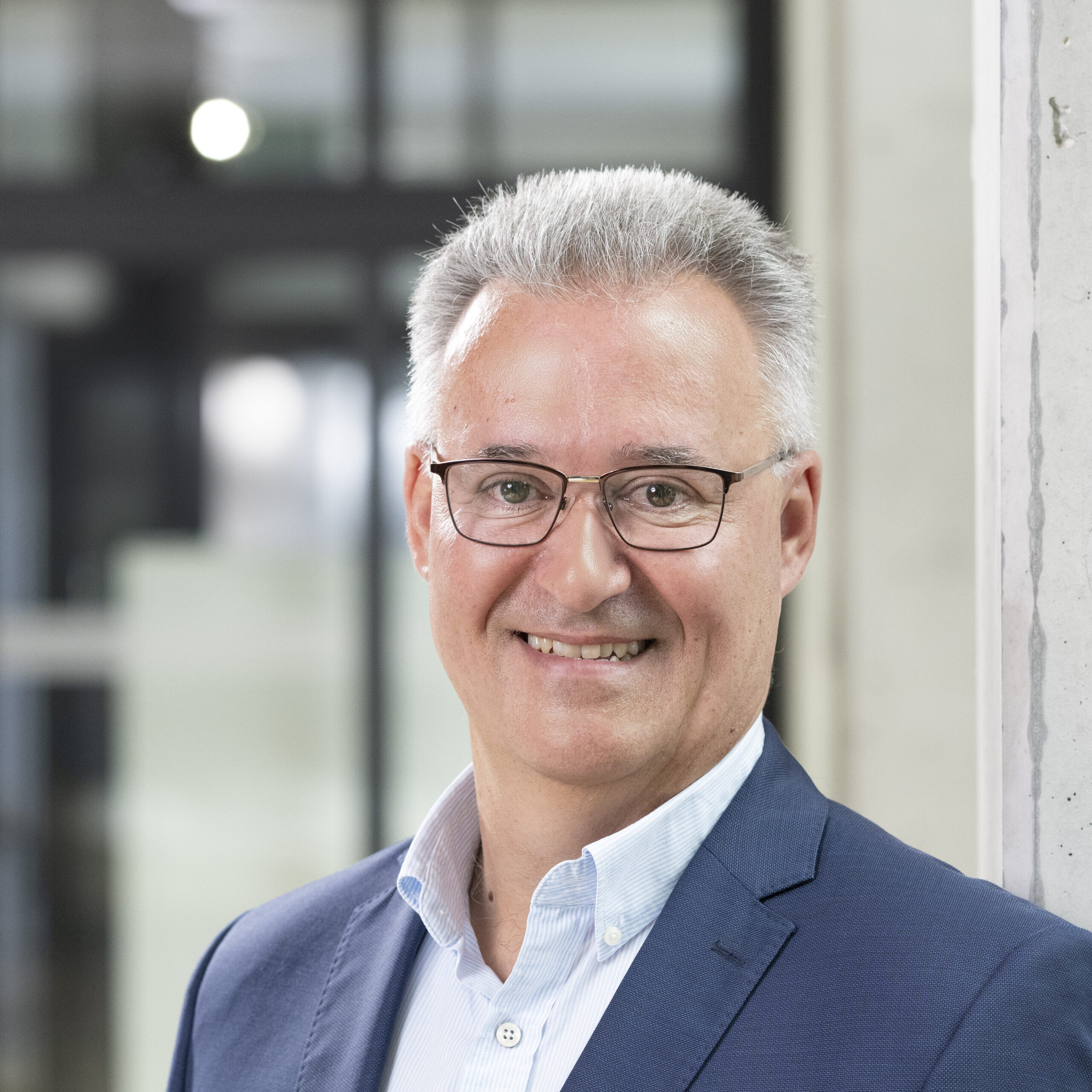
Founder &
Scientific Advisor
Eric is Professor of Technical Biology at Karlsruhe Institute of Technology (KIT) and has worked on 3D cell culture, microstructured materials and tissue engineering since the mid-1990s. His group at KIT has been instrumental in developing microcavity array systems, micro-bioreactors and microthermoformed scaffolds that form the technological basis for CaviSphere. Eric has co-authored numerous peer-reviewed publications in the field of 3D culture, micro-bioreactors and advanced in vitro systems, including systematic reviews and methodological papers.
He has extensive experience with spin-offs and industry collaboration: Eric was co-founder and CEO of 300MICRONS GmbH, a company focused on microstructured 3D cell culture systems, and has been involved in multiple technology transfer projects. His research has been supported by various national and international grants, and he has contributed to the scientific community through teaching, supervision of PhD projects and advisory roles.
At CAVIGEN, Eric acts as Scientific Advisor. He guides the biological direction of the company, helps shape assay concepts and validates new applications of the CaviSphere platform in collaboration with academic and industrial partners. His long-standing expertise and network ensure that CAVIGEN’s technology remains closely aligned with the state of the art in 3D cell biology and tissue engineering.
At CAVIGEN, we believe that innovation thrives in an environment of openness, collaboration and continuous learning. We foster a culture in which sharing ideas, taking responsibility and working transparently are central to our daily work. This mindset helps us build technology that is not only scientifically sound but also genuinely useful for the researchers and partners we work with.
Why Work with Us?
CAVIGEN combines advanced sensor technology with deep experience in 3D cell biology to develop 3D culture systems that are both practical and scientifically robust. Our focus on oxygen-aware 3D models helps labs interpret their data under conditions that more closely reflect the in vivo situation.
Smooth integration
CaviSphere inserts and films fit into existing plate-based workflows, microscopes and Organ-on-Chip setups.
More reproducible 3D models
microcavity arrays support controlled spheroid and organoid formation.
Oxygen-aware measurements
optical oxygen sensing in SensoSphere reveals pericellular oxygen profiles in 3D.
Recognition and network
Recognition
CAVIGEN and the CaviSphere® platform have been recognised in several innovation and start-up programmes, including:
- CyberOne Hightech Award – 2nd place in the Life Sciences category
- Road to START Summit Stuttgart – 1st place
- VivaTech Tech4Change – selected as one of the Tech4Change innovators
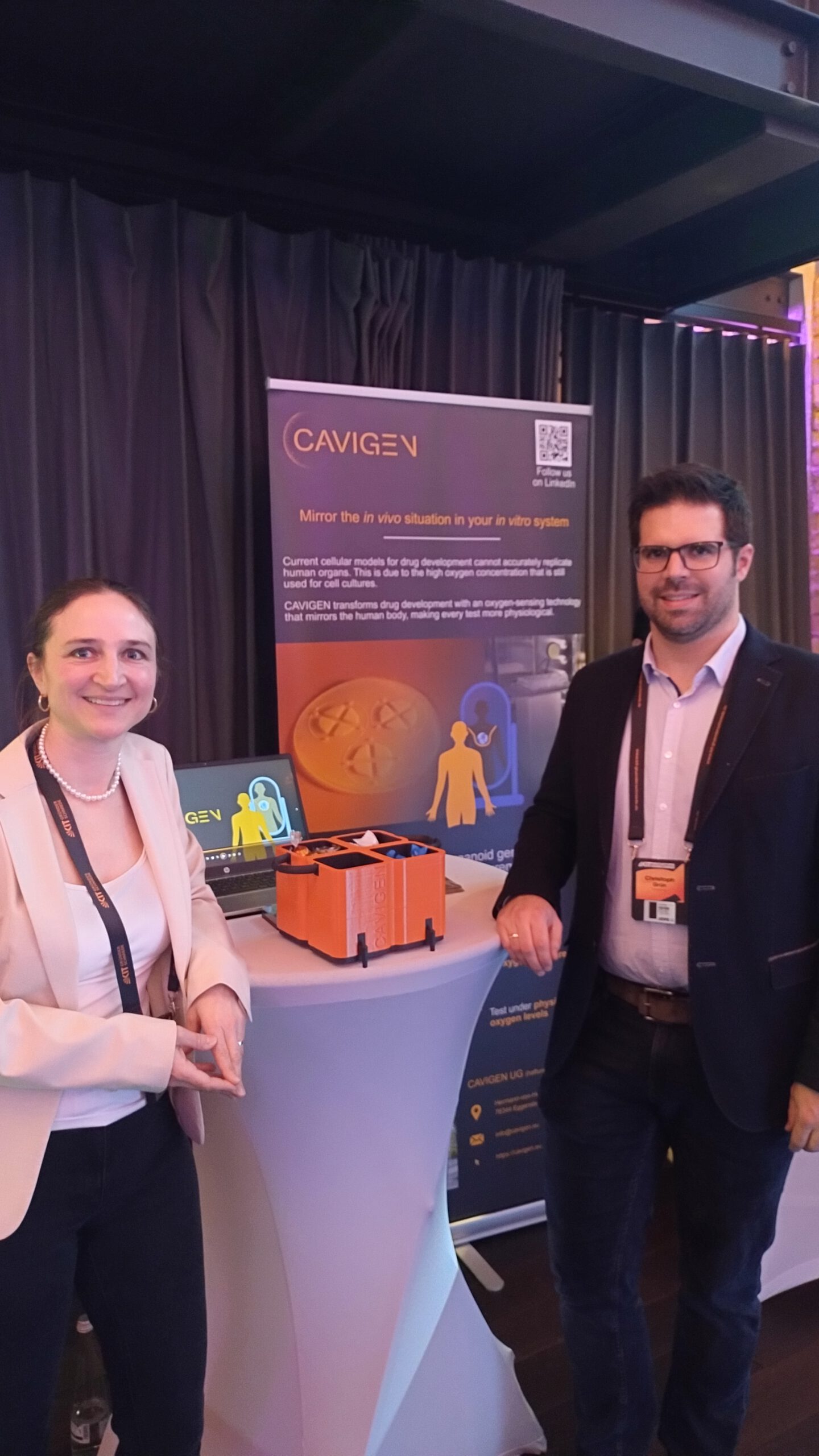
Beyond awards, we regularly present our work at leading conferences on 3D cell culture, Organ-on-Chip and microphysiological systems, such as European Organ-on-Chip Society meetings and 3D cell culture conferences. This visibility helps us stay closely connected to the international scientific community and to emerging application needs.
Network
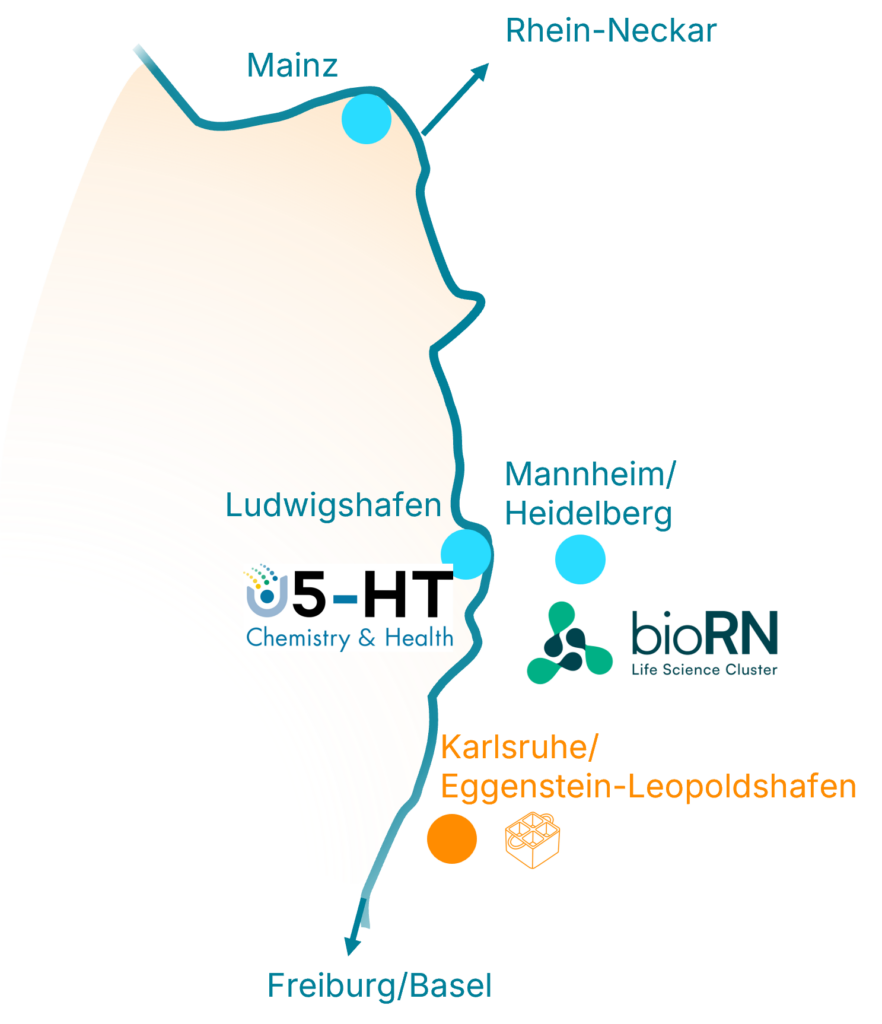
CAVIGEN is based near Karlsruhe Institute of Technology (KIT) in Eggenstein-Leopoldshafen, in the Rhine-Neckar life science region between Basel and Mainz. From here we are closely connected to key academic and clinical hubs such as Mannheim, Heidelberg and Freiburg, where first pilot projects with CaviSphere® are already running.
We are active in regional and national networks such as BioRN – the life science cluster Rhine-Neckar – and the 5‑HT Digital Hub Chemistry & Health, which connect us to pharmaceutical companies, biotech start-ups and technology providers. The location offers excellent transport links and makes it easy to collaborate with partners across Germany and neighbouring European regions.
Work with us
If you are interested in bringing CaviSphere® into your lab, co-developing applications or exploring partnership opportunities, we would be happy to talk.
© KIT/Markus Breig