
PoroSphere –
porous microcavity arrays for dynamic 3D cultures and co-cultures
PoroSphere arrays extend the CaviSphere® platform to applications where exchange and flow are essential. By combining defined microcavities with controlled porosity, PoroSphere supports dynamic 3D cultures, co-cultures and barrier models – from permeability assays to Organ-on-Chip environments.
If you are interested in how cells behave under perfusion, how compounds cross a barrier, or how different cell types interact in 3D, PoroSphere provides a structured and reproducible basis for your experiments.
Key features:
- Porous microcavity walls for medium and factor exchange
- Designed for dynamic culture, co-cultures and barrier-like setups
- Suitable for permeability, migration and interaction assays
- Compatible with microfluidic and Organ-on-Chip systems
- Same microcavity concept as MicroSphere and SensoSphere
- Custom porosity and layouts available on request
Why use PoroSphere for dynamic 3D models?
Many 3D models require more than just static culture. PoroSphere introduces porosity into the microcavity walls, enabling:
- controlled exchange of medium, nutrients and factors between cavities and surrounding channels
- co-cultures where different cell types can interact across a porous interface
- barrier- and permeability-type experiments in a defined 3D geometry
This makes PoroSphere a useful building block for questions that involve transport, interaction and flow – while still benefiting from the same microcavity architecture that underlies MicroSphere and SensoSphere.
Many 3D models require more than just static culture. PoroSphere introduces porosity into the microcavity walls, enabling:
- controlled exchange of medium, nutrients and factors between cavities and surrounding channels
- co-cultures where different cell types can interact across a porous interface
- barrier- and permeability-type experiments in a defined 3D geometry
This makes PoroSphere a useful building block for questions that involve transport, interaction and flow – while still benefiting from the same microcavity architecture that underlies MicroSphere and SensoSphere.
PoroSpheres as insterts and sheets
PoroSphere is available in two formats to support both standard and advanced setups:
PoroSphere Inserts
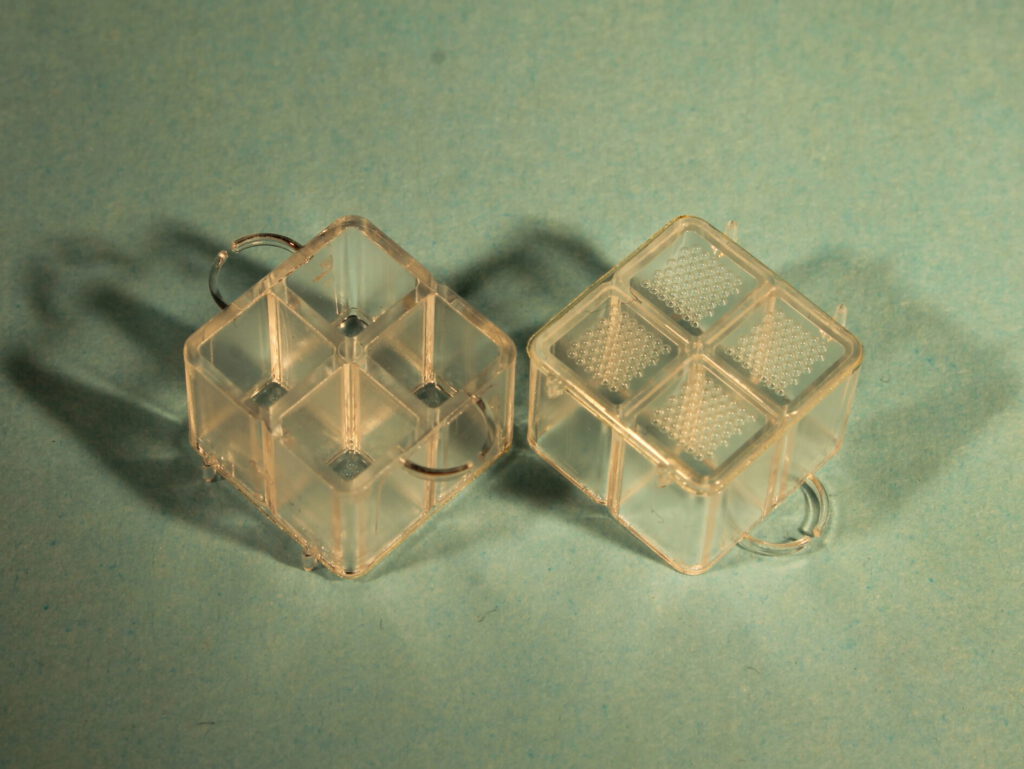
- For users who want to explore porous 3D cultures in familiar plate formats
- Suitable for co-culture and migration assays without building a custom device
- Compatible with standard incubators and microscopes
PoroSphere Sheets
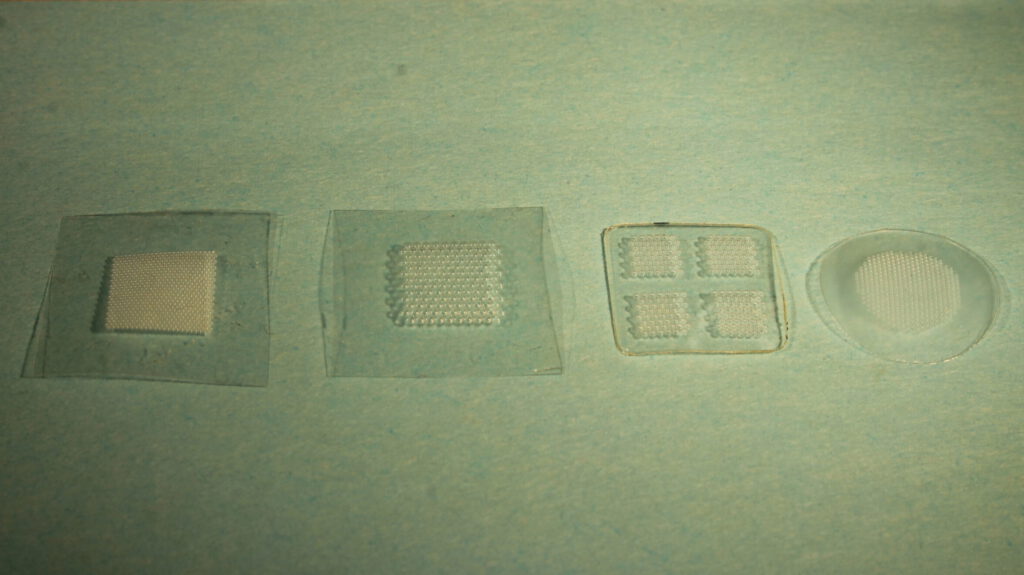
- For integration into Organ-on-Chip devices and microfluidic systems
- Allow you to combine defined 3D microcavities with flow, channels and external pumps
- Ideal for collaborative developments and more complex experimental designs
Typical applications for PoroSphere
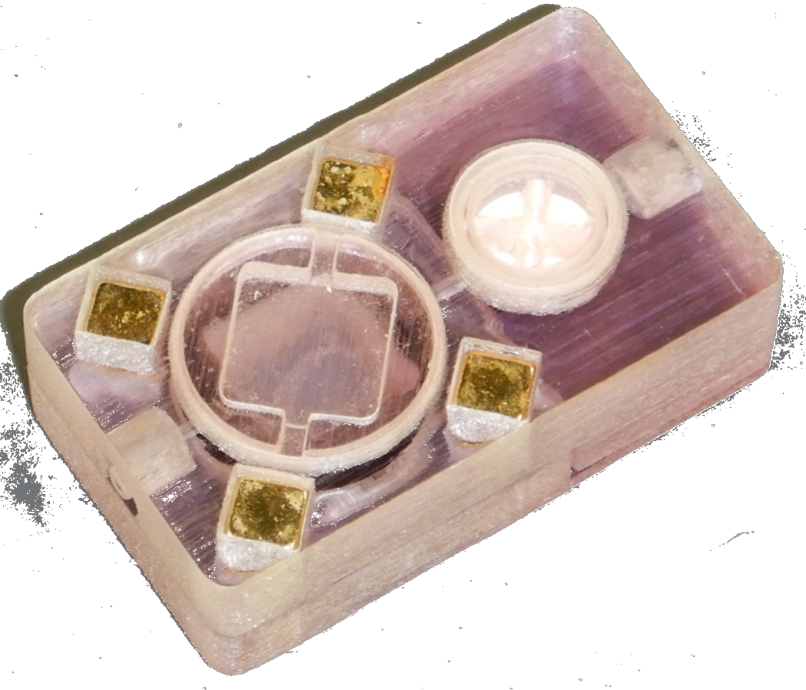
PoroSphere is particularly suited for:
- Co-culture models
Different cell types cultured in or around porous microcavities, allowing interaction through the porous walls. - Permeability and barrier assays
Assessment of how molecules or cells move across a porous interface in 3D. - Migration and invasion assays
Studying how cells migrate into or out of microcavities under defined conditions. - Organ-on-Chip and microfluidic setups
Use PoroSphere films as a 3D culture and exchange interface within chip-based systems.
Part of the CaviSphere platform
Like MicroSphere and SensoSphere, PoroSphere is part of the CaviSphere platform. This means:
- the basic microcavity concept remains the same
- workflows and analysis pipelines can be aligned across variants
- you can combine PoroSphere with MicroSphere (e.g. for simpler models) or upgrade towards SensoSphere when oxygen measurements become relevant
Interested in using porous 3D microcavities for your next experiment?